 1 Apr 26
A no-filler reading list of the ten UI/UX books that actually shaped how we design at Identiti, from usability classics to design systems, each linked to its official source.
There is no shortage of UI/UX book lists, and most of them pad the count with titles nobody finished. This is not that. These are the ten books we actually return to at Identiti, the ones that changed how we think about interfaces, users, and the decisions that separate a pretty screen from one that works. They range from quick, practical reads to foundational texts, and together they cover usability, psychology, visual craft, patterns, and systems. Each is linked to its own official source so you can go straight to the real thing.
The reading list
Start Here: The Essentials
If you read nothing else, read the first three. They are short, foundational, and will change how you look at every interface you touch afterward.
✅ 1. Don’t Make Me Think, Revisited
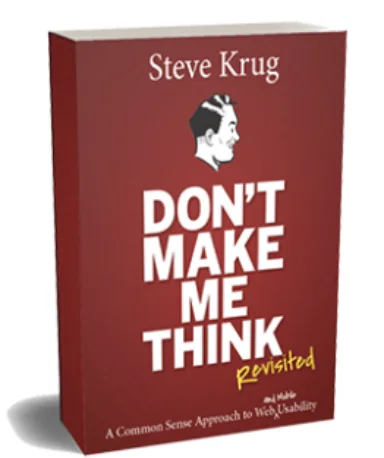
Steve Krug’s classic is the single best starting point for anyone who touches web design. Its whole argument is in the title: every moment a user has to stop and think is friction, and good design makes the obvious obvious. It is short, funny, and endlessly practical, and its lessons about self-evident design underpin almost everything we believe about conversion. If you buy one book on this list, buy this one first.
✅ 2. The Design of Everyday Things
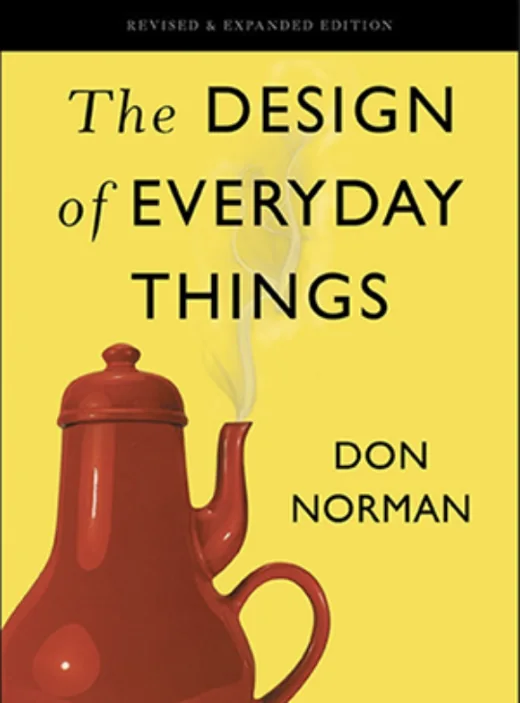
Don Norman’s foundational text is about doors and stoves as much as software, and that is the point. Concepts like affordances (what an object tells you it can do) and signifiers (the cues that show you how) apply directly to buttons, links, and forms. Once you have read it, you cannot unsee bad design, and you understand why so much of it fails: it ignores how humans actually perceive and act.
✅ 3. The Elements of User Experience
Jesse James Garrett’s five-plane model is the clearest map ever drawn of how user experience fits together, from abstract strategy down to the concrete surface. It is the book that helps you see UX as a coherent stack of decisions rather than a pile of disconnected tactics, which is exactly the perspective that keeps a project from drifting.
Design Psychology: Understanding People
Great UX is applied psychology. These books explain the human on the other side of the screen.
✅ 4. Laws of UX
Jon Yablonski gathered the key psychological principles designers keep rediscovering, Hick’s Law, Fitts’s Law, Jakob’s Law, the aesthetic-usability effect, and more, into one clear, beautifully presented reference. It is the fastest way to build a working mental library of why interfaces succeed or fail, and a natural companion to designing with human behavior in mind rather than guessing.
✅ 5. 100 Things Every Designer Needs to Know About People
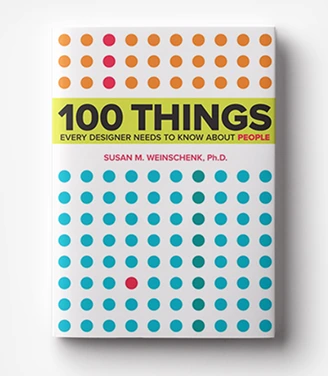
Susan Weinschenk, a behavioral scientist, distills research on perception, attention, memory, and decision-making into a hundred short, actionable insights. It is the kind of book you can open to any page and immediately find something you can apply, and it grounds design choices in evidence about how people actually behave rather than in taste.
✅ 6. Hooked: How to Build Habit-Forming Products
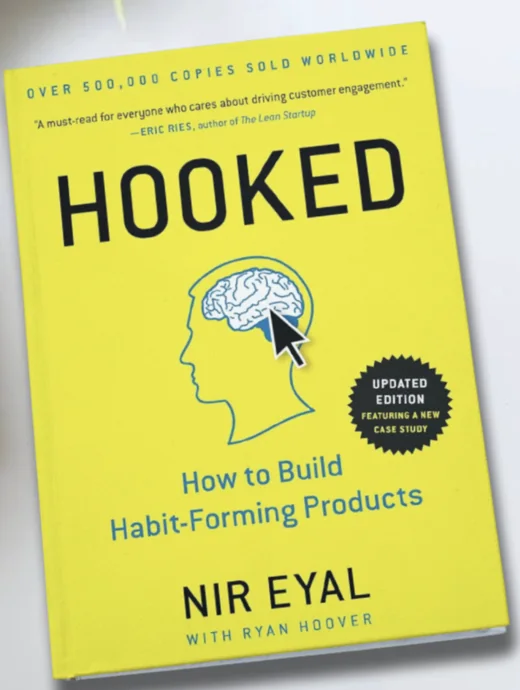
Nir Eyal’s Hook Model, trigger, action, variable reward, and investment, explains how products build engagement and habit. Read it partly as a toolkit and partly as an ethics lesson, because the same mechanics that build genuinely useful habits can be misused. Understanding the model makes you both a better and a more responsible designer.
Craft and Systems: Making It Real
These books turn understanding into pixels, patterns, and repeatable process.
✅ 7. Refactoring UI
From the creators of Tailwind CSS, Adam Wathan and Steve Schoger, this is the most immediately useful visual design book we know, especially for people who write code but were never formally trained in design. It is a dense collection of tactical tips on spacing, color, typography, and hierarchy that will visibly improve your work the same afternoon you read it.
✅ 8. Designing Interfaces
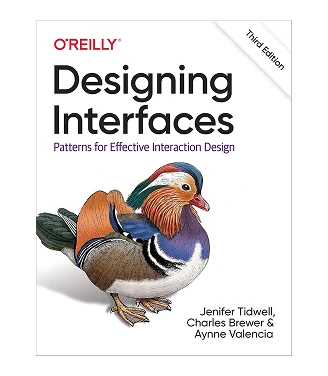
Jenifer Tidwell’s pattern language catalogs proven solutions to recurring interface problems, so you are not reinventing navigation, forms, or layouts from scratch every time. It is a reference to keep on the shelf and reach for when you hit a familiar problem, which is most of them. Patterns are how experienced designers move fast without starting over.
✅ 9. Atomic Design
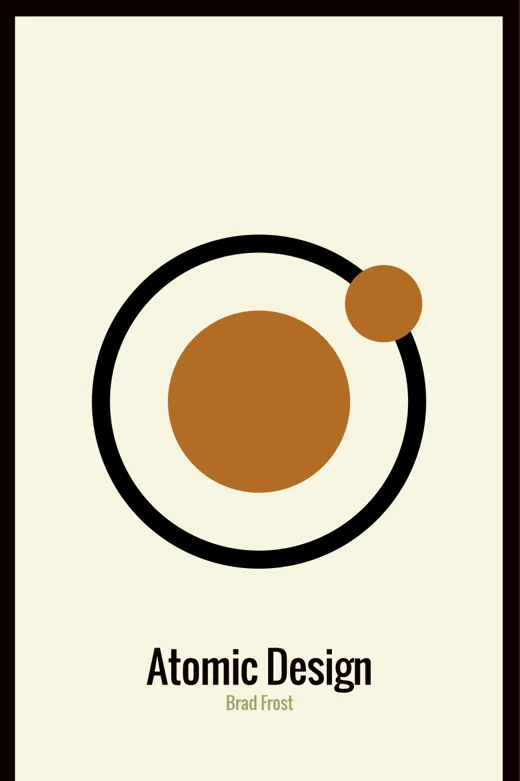
Brad Frost’s methodology, building interfaces from atoms up to templates and pages, is the thinking behind modern design systems. If your team is scaling and your UI is drifting into inconsistency, this is the mental model that brings order to it. It is available free online, which makes skipping it hard to justify.
✅ 10. Sprint
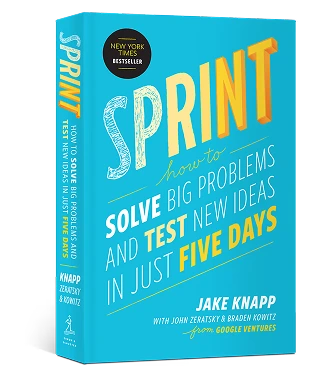
Jake Knapp’s five-day design sprint is less about pixels and more about process: how to go from a big question to a tested prototype in a week, before you sink months into building the wrong thing. It is the book that helps teams validate ideas fast and argue less, and it pairs naturally with a culture of testing rather than guessing.
How to Actually Use This List
Do not try to read all ten at once. Start with the essentials to build your foundation, add the psychology books to understand your users, and reach for the craft and systems titles when you hit the specific problems they solve. Reading about design is not the same as doing it, so treat each book as a lens to apply to real work rather than a box to tick. The best designers we know are not the ones who read the most, they are the ones who took a few of these ideas and actually built with them.
A final note on why this matters for a business and not just a design team: every one of these books is ultimately about reducing friction and respecting the person on the other side of the screen, which is the same thing that drives conversion. Understanding your users deeply is the foundation of a brand that connects, the same instinct behind leading with why rather than what and behind designing pages for the way people actually scan.
If you want a team that has internalized these ideas working on your site, that is a conversation away.